
Tiago Vasquez Is Building More Than Songs
The Vancouver R&B soul artist talks music, responsibility, community, and why the real revolution is learning how to hold each other down.
Some artists chase the spotlight.
Some artists chase the feeling.
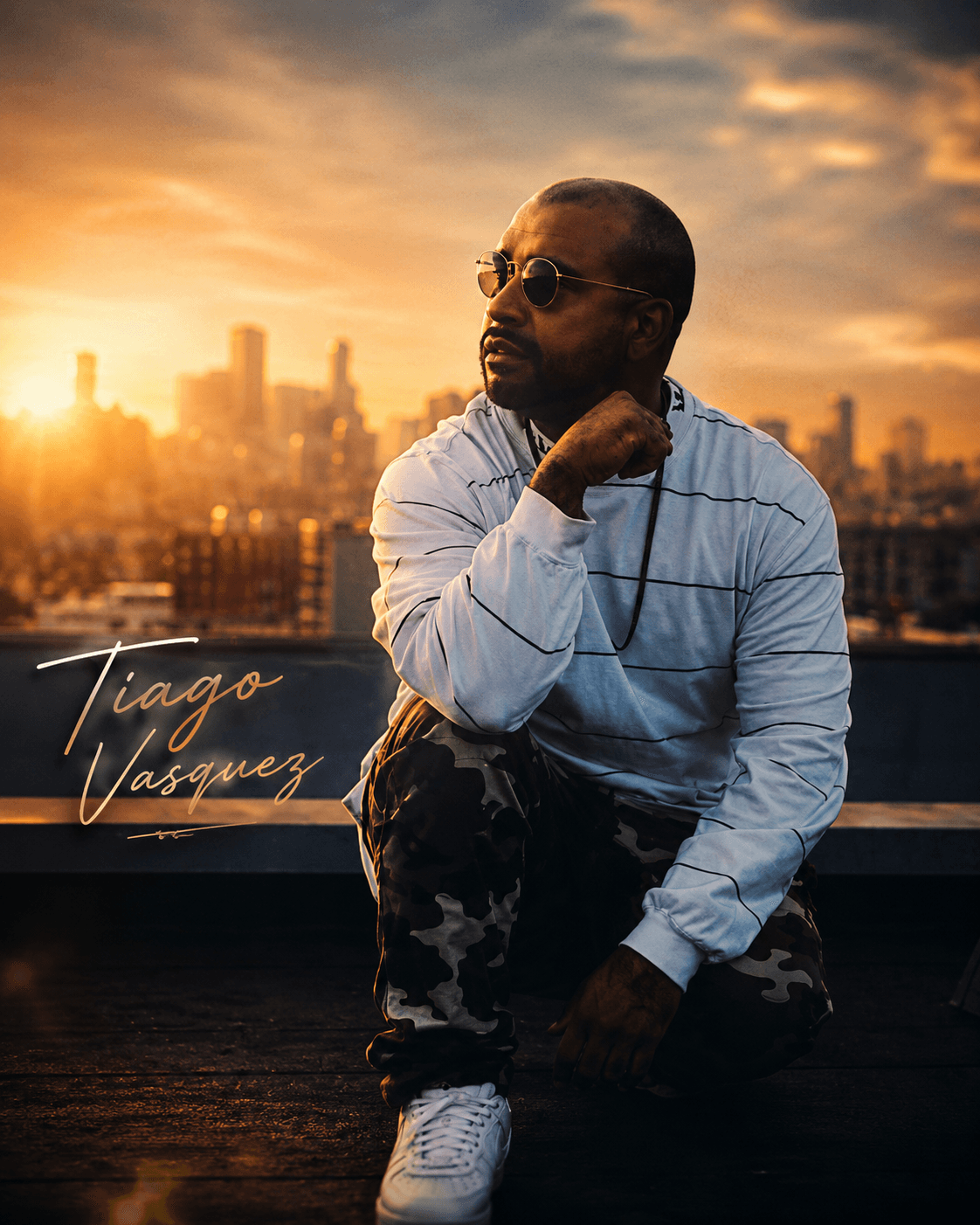
Tiago Vasquez sounds like the second kind.
In his Dopest Natives Alive interview with Rich Unk, Tiago does not come across like somebody trying to sell an image. He comes across like somebody who has lived enough life to know that music is bigger than performance. It is memory. It is responsibility. It is work. It is family. It is community. It is the thing you keep doing even when the world does not hand you the perfect stage, the perfect budget, or the perfect industry machine.
That is what makes the conversation hit.
This is not just an interview about an R&B singer from Vancouver.
It is a conversation about what it means to keep building.
Building songs.
Building family.
Building business.
Building community.
Building yourself.
R&B Soul With Work Boots On
Tiago describes his lane as R&B soul, but there is nothing soft or manufactured about the way he carries it. His sound comes from real places: 90s R&B, East Van history, live musicianship, family stories, cultural spaces, and years of figuring out who he is as an artist.
He is not boxed into one genre. He can rap. He can sing. He has moved through dancehall, salsa, soul, and hip hop spaces. But when he talks about his own center, it comes back to feeling.
That is the real difference.
Anybody can record vocals.
Not everybody can make you believe them.
Tiago's gift is not just that he can sing. It is that his voice carries weight without needing to force it. There is a lived-in quality to the way he speaks about music. He is not trying to sound like the moment. He is trying to catch the moment.
That is why the studio conversation in the interview is so important. Tiago and Rich talk about those sessions where something spiritual happens in the room. The take might not be technically perfect, but it has life in it. It has breath. It has timing. It has the feeling that only existed right there, with those people, in that room, at that exact time.
You can redo a vocal.
You cannot always summon the same spirit twice.
That is a musician's truth.
And Tiago understands it.
"Anybody can record vocals. Not everybody can make you believe them."
Watch the Full Tiago Vasquez Interview
The Grown Man Version of the Dream
There is a certain kind of dream people sell to artists.
Quit everything. Blow up overnight. Become rich. Become famous. Leave regular life behind.
But most real artists know the truth is different.
You still have bills.
You still have family.
You still have responsibilities.
You still have to wake up and handle business.
That is one of the strongest parts of the interview. Rich and Tiago talk openly about being artists while also being working men. They are still chasing the dream, still creating, still believing in the music — but not from some fantasy world where responsibility disappears.
That is grown artist energy.
Tiago is not presented as some untouchable celebrity figure. He is a singer, a builder, a partner, a community member, and an entrepreneur trying to make the pieces line up. That makes him more relatable, not less.
Because the real dream is not just fame.
The real dream is freedom.
Freedom to create.
Freedom to move at your own pace.
Freedom to build something with your own hands.
Freedom to step into a studio in the middle of the day because you are no longer waiting for somebody else to give you permission.
That is where Tiago's business, ProGlide Services, becomes part of the story. It is not a side note. It is part of the same movement. After years of working for big corporations, Tiago talks about wanting to spread his wings and do his own thing.
That is not separate from the music.
That is the music in another form.
The same man trying to build songs that last is also trying to build a life that lasts.
"The real dream is not just fame. The real dream is freedom."
Music That Does Not Leave People Broken
One of the most powerful ideas in the interview is Tiago's vision for music that uplifts people.
A lot of artists know how to describe pain. That part is easy now. The whole internet is full of pain. Trauma has become content. Struggle has become branding. Sadness has become an algorithm.
But Tiago is reaching for something different.
When he talks about The Real Ones, his project with Loca Leoni and CJ Cash Jr., he describes music that still comes from real struggle, but does not leave the listener buried there. He talks about pain in the voice, storytelling, piano, trumpets, beautiful instrumentals, and the intention to elevate people instead of just dragging them through darkness.
That is a mature creative decision.
It is easy to make people feel heavy.
It is harder to make people feel hopeful without sounding fake.
That is where Tiago's R&B soul background matters. Soul music has always known how to hold both things at once: grief and beauty, heartbreak and survival, pain and movement. Tiago is not running away from the hard parts of life. He is asking what can be made from them.
That is the responsibility of an artist with something real to say.
Do not just open the wound.
Bring medicine.
"Do not just open the wound. Bring medicine."
The Responsibility of Who Is Listening
Another part of the conversation that stands out is the decision to think about the audience — especially the younger audience.
Tiago talks about wanting music that can reach the kids too. That does not mean watering the music down. It means being aware of the ears receiving it.
That matters.
Artists influence the emotional weather around them. Words can make somebody feel worthless, or words can help somebody survive another day. Rich says it clearly in the interview: what we say to each other has power. A person can tear someone down with their voice, or they can tell them they are loved and supported.
Both are powerful.
Tiago seems to understand that music works the same way.
Every hook is a message.
Every verse is a direction.
Every performance is a chance to either feed the chaos or feed the spirit.
That is why this interview is not just about what Tiago has done. It is about what kind of artist he is choosing to become.
East Van Memory, Not East Van Mythology
The conversation also moves through East Van history, but not in a fake nostalgic way.
There is no polished tourism version of the city here.
This is memory from people who actually lived around the music, the projects, the parties, the crews, the tension, the humour, the danger, and the community. Rich and Tiago talk about Main and 33rd, local legends, gentrification, old housing projects, and the way Vancouver has changed.
But this is not about turning East Van into a museum.
It is about recognizing that artists come from somewhere.
A voice is shaped by place.
A sound is shaped by housing, movement, family, schoolyards, basketball courts, house parties, cultural events, and the people who opened doors when nobody else was checking for you.
Tiago's path through Vancouver music carries that local memory. He came up around people who were already part of the city's hip hop foundation. He watched, listened, sent music out, took opportunities, and kept building.
That is how scenes survive.
Not just through the stars.
Through the connectors.
Through the singers on the hook.
Through the studio sessions.
Through the people who remember who was there.
The Real Revolution Is Holding Each Other Down
Near the end of the interview, the song "Hold Me Down" becomes more than a track title. It becomes the whole point.
Rich talks about not selling people smoke and mirrors. He talks about artists having dreams, but also having day jobs, children, partners, and real-life responsibilities. Tiago talks about his contracting business. The conversation becomes a call for community support that is practical, not performative.
Book the artist.
Stream the music.
Show up to the event.
Call the business.
Hire the brother.
Share the platform.
Keep the money moving.
That is the kind of support that actually changes people's lives.
It is easy to say you support local artists. It is different to buy the ticket, share the interview, hire the company, book the performance, or tell someone else to tap in.
That is what Dopest Natives Alive is built for.
Not just documenting culture.
Circulating it.
Not just platforming artists.
Helping people see the full person behind the art.
Tiago is not just a voice on a song. He is a working artist building a life around music, business, family, and community. That is the story people need to see, because that is the story most real artists are living.
Tiago Vasquez Is Still Catching the Spirit
What makes Tiago compelling is not just his talent.
It is his intention.
He is not chasing gimmicks. He is not trying to be louder than everybody else. He is not pretending the music industry is easy. He is not pretending pain does not exist. But he is also not letting pain be the final destination.
He is making music that wants to move people somewhere.
Toward memory.
Toward feeling.
Toward healing.
Toward responsibility.
Toward each other.
That is why Tiago Vasquez deserves to be heard beyond the circle that already knows his name. Vancouver has a long history of talented artists who never got the shine they deserved. Dopest Natives Alive exists partly to correct that — to document the people who were there, the people still building, and the people whose voices carry more than the algorithm can measure.
Tiago's voice carries soul.
But more than that, it carries work.
And maybe that is the real story.
Not just that he can sing.
But that he is still building something worth singing for.
"Tiago's voice carries soul. But more than that, it carries work."
Support Tiago Vasquez
Stream the music. Pull up to the shows. Support the business. Keep the money moving through the community.